II. Unveiling the 2,000-year Mystery of the
Visions in the Book of Revelation
For the past two thousand years, the
Book of Revelation has remained the most mysterious book in the Bible. Many
intelligent scholars, faithful priests and preachers have attempted to decode
its prophecies. Some have successfully interpreted the prophetic meaning of the
seven letters to the seven churches, but none have been able to unlock the true
meaning of the visions recorded on the scroll.
The primary reason no one could decode
these visions is the divine authority required to unseal their mystery. As
described in Revelation chapter 5, when the One seated on the throne held out
the scroll written on both sides and sealed with seven seals, “no one in
heaven or on earth or under the earth could open the scroll or even look inside
it." Only Christ the Lamb was worthy with the authority to break the
seals and open the scroll. (Revelation 5:1-10)
Even after the seals were broken and the
scroll was opened, no one understood the visions for the past two thousand
years. This is because God’s prophecies are not meant to be fully decoded
before they are fulfilled. That’s another reason that the visions in the Book
of Revelation could not be decoded in the past two thousand years. Only when the
"Second Coming" of the Messiah arrives, and after most of these
prophecies have been fulfilled, will the 2,000-year mystery of the visions in
the Book of Revelation be unveiled.
Now, as the “Second Child”
prophesied in the Bible has come with the Authority of the Messiah, and as most
of the prophecies in the Book of Revelation have already been fulfilled, the
time has come to unveil the two-thousand-year mystery of the Book of Revelation.
Contrary to what many have believed, the visions on the scroll are not about
disasters at the “End Time,” but rather about major historical events in
Christian history over the past two millennia, from the early centuries all the
way to the New Millennium.
To comprehend the true meaning of the
prophecies in the Book of Revelation, people must examine how the prophecies in
the Book of Daniel were fulfilled, for God is consistent in the way He fulfills
His prophecies.
1. Multiple Visions for the Multiple
Confirmation of God’s Prophecies
In the Book of Daniel, there are three
prophetic dream and visions: the dream of large statue (Daniel 2), the vision of
four beasts (Daniel 7), and the vision of a ram and a goat (Daniel 8). All three
prophesied the same historical events– the rising of four kingdoms:
Babylon, Medo-Persia, Macedon-Greece, and Rome, spanning from the 600s BC to the
400s AD. God used three sets of dream and visions in the Book of Daniel to
confirm the prophecy of the rising of these four kingdoms.
Similarly, the Book of Revelation
contains two distinct sets of visions: the seven letters to the seven churches
(Revelation 2-3) and the visions on the scroll (Revelation 6-22). Following the
same divine pattern, these two sets of visions also prophesied the major
historical events in the same historical period.
| |
The Multiple Visions of Prophecies |
The Fulfillment of the Prophecies |
| Book of Daniel |
1. The Dream of a Giant Statue (Daniel
2)
2. The Vision of the Four Beasts (Daniel 7)
3. The Vision of the Ram and the Goat (Daniel 8) |
The Rise of the Four Kingdoms:
1. The Neo-Babylonian Empire (Nebuchadnezzar)
2. The Medo-Persian Empire (Cyrus the Great)
3. The Macedonian-Greek Empire (Alexander the Great)
4. The Roman Empire (Caesar) |
| Book of Revelation |
1. The Seven Letters to the Seven
Churches (Revelation 2-3)
2. The Vision on the Scroll (Revelation 6-20) |
The Major Historical Events in the
Christian history from the early century to the New Millennium |
Although the seven letters to the seven
churches appear to be ordinary pastoral messages containing Christ’s words of
warning, rebuke, encouragement, and promised rewards, they also carry profound
prophetic meaning regarding the future development of Christianity over the next
two thousand years.
Now, I will begin with the
interpretation of the prophetic meaning of the first set of visions in the Book
of Revelation: the seven letters to the seven churches.
2. The Prophetic Meaning of the Seven
Letters to the Seven Churches
These seven churches were located in seven cities in
Asia Minor– Ephesus, Smyrna, Pergamum, Thyatira, Sardis, Philadelphia
and Laodicea-which are in present-day western Turkey.
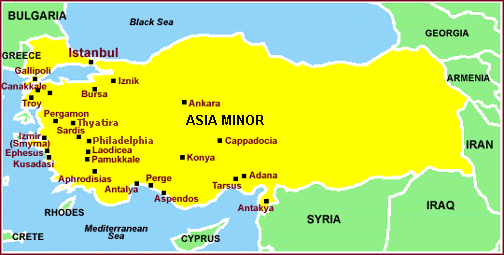
The map of the seven cities where these seven churches were
located
As the Book of Revelation is the final
book of prophecy (Revelation 22:18-19) in the Bible, these seven letters to the
seven churches also carry the prophetic meaning far beyond the literal teachings
of Christ to these seven churches in Asia Minor. They prophesy the seven phases
or periods of Christianity over the next two thousand years.
Here is a summary of the prophetic
meaning of the seven letters to the seven churches:
1) The Letter to the Church in Ephesus
The name of the first city, “Ephesus”,
means “desirable, appealing” in Greek. This indicates the roles of the
Apostles as the “golden lampstands" for Christians in the early
church. In this letter, Christ praised the early Christians for their deeds,
hard work and perseverance, but reprimanded them for forsaking their first love.
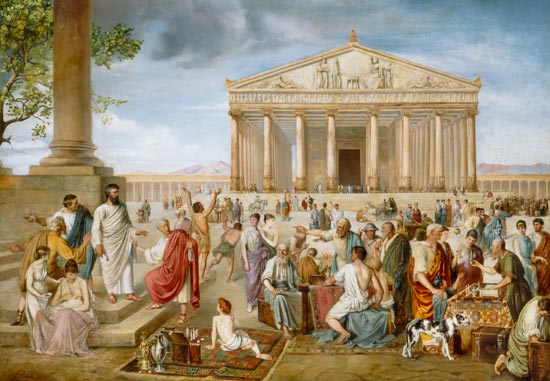
Apostle Paul Preaching the Gospel in the Roman Empire
This Letter to the Church in Ephesus
represents the Apostolic Period of Christianity (30 – 100 AD), when the
Apostles preached the Gospel across the Roman Empire from Jerusalem to Rome,
including Asia Minor. That is the reason Christ praised the early Christians for their deeds,
hard work and perseverance.
However, the Apostle Peter acted too harshly when he
rebuked the couple Ananias and Sapphira to death after they withheld some of
their possessions. (Acts 5:1-10) That is why Christ reprimanded them for forsaking their first love.
2) The Letter to the Church in Smyrna
The name “Smyrna” is derived from
the word “myrrh”, a bitter gum and aromatic perfume used as an antiseptic
for embalming. The name “Smyrna” therefore carries the meaning of “suffering
and preserving”. In this letter, Christ warned the Christians that they would
suffered persecution, with “afflictions and poverty," and that
some would be tested “even to the point of death." (Revelation
2:9-10)
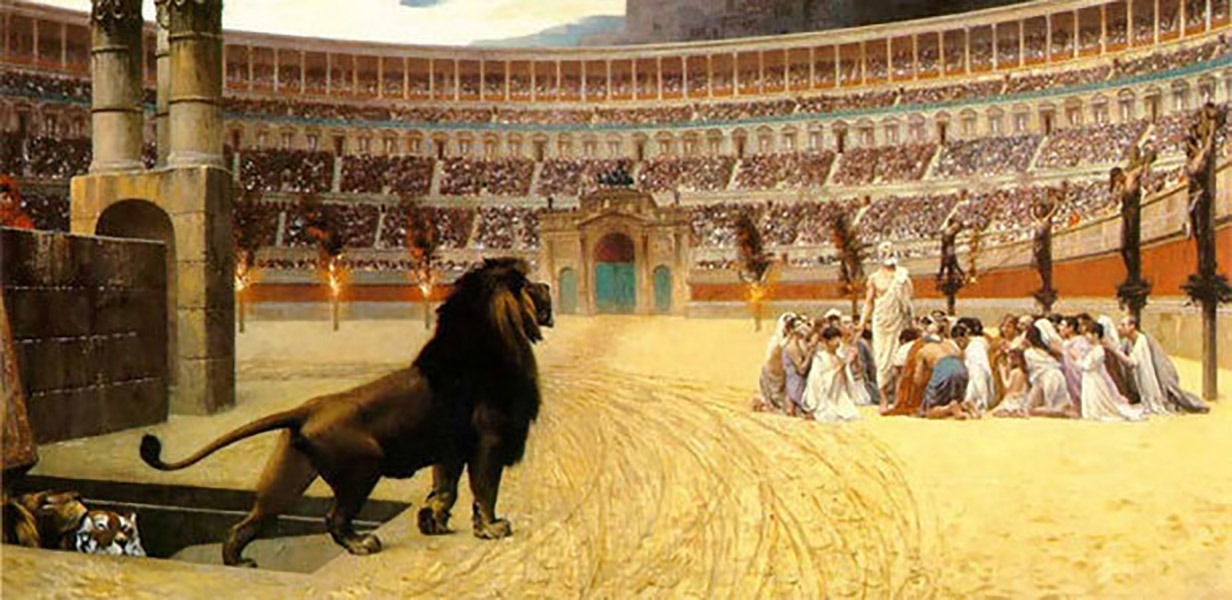
Christians were persecuted in the Roman Empire
This Letter to the Church in Smyrna
prophesies the Persecution Period of Christianity (100 – 313 AD),
during which early Christians suffered heavy persecution from the Roman Empire.
3) The Letter to the Church in Pergamum
The name “Pergamum” in Greek means
“strongly united,” “knitted together”, or “elevated.” This was the
period when the state and the church became closely united and Christianity was
elevated to the status of the state religion of the Roman Empire. In this
letter, Christ pointed out that they were living “where Satan has his
throne,” yet they remained true to His name. (Revelation 2:13) Christ also
warned that many would fall into false teaching, and that He would come soon to
“fight against them with the sword of my mouth.” (Revelation 2:14-16)
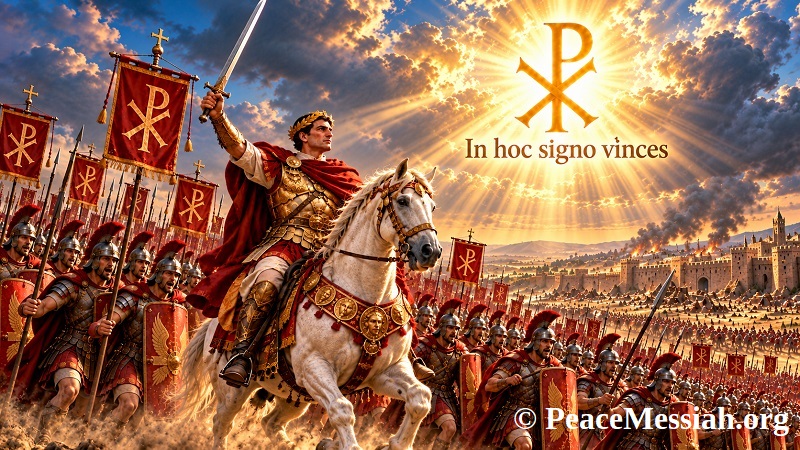
Roman Emperor Constantine the Great Convert the Roman
Empire to Christianity
This Letter to the Church in Pergamum
prophesies the Elevated Period of Christianity (313 – 590 AD), when
Emperor Constantine the Great liberated Christians from government persecution,
issued official decrees favoring Christianity, and laid the foundation for it to
become the state religion of the Roman Empire in the late 300s AD.
4)
The Letter to the Church in Thyatira
The word “Thyatira” means “burning
of incense,” “sacrifice of perfume,” or “odor of affliction.” This
points to the formalized rituals of the church, which included the burning of
incense and other offerings. This letter issues a strong warning against the
sins of Jezebel—sexual immorality and idolatry (Revelation 2:20)—but also
give the church “authority over the nations –‘He will rule them with an
iron scepter, he will dash them into pieces like pottery’ – just as I have
received authority from my Father” (Revelation 2:26-27).
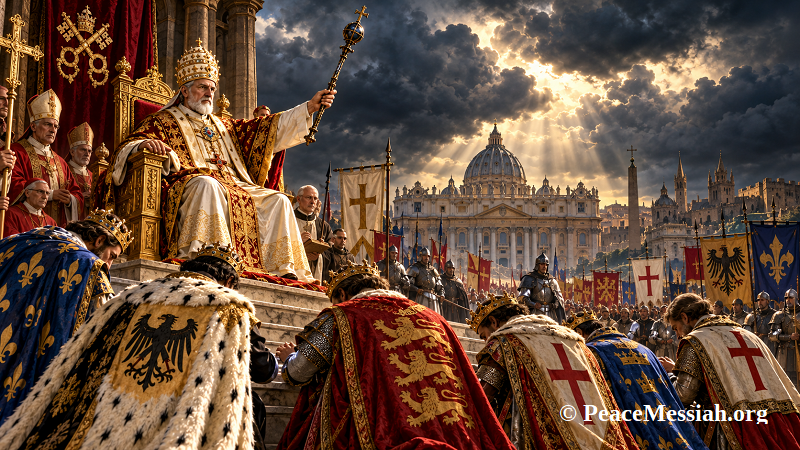
The Papal Authority over Christian Nations in the Medieval
Age
This Letter to the Church in Thyatira
prophesies the Authoritative Period of Christianity (590 – 1517 AD),
when God granted the Roman Catholic Church a thousand years of Papal Authority
(the "Iron Scepter") over the Christian nations, beginning with Pope St.
Gregory the Great (the “Father of the Medieval Papacy”).
But in the later years of the
Medieval Age, the Catholic Church fell into the sins of Jezebel. God
ended this Supreme Authority over all Christian nations with the
Protestant Reformation in the 16th century.
5) The Letter to the Church in Sardis
The word “Sardis” relates to “Sard”
or “Sardonyx”, a precious red-and-white stone. The word “Sardius” is
also the first of the twelve precious stones in the breastplate of the Jewish
high priest (Exodus 28:17, KJV). This represents the most precious thing in
Christianity: faith in Christ. In this letter, Christ gives a stern warning: “I
know your deeds; you have a reputation of being alive, but you are dead. Wake
up! Strengthen what remains and is about to die, for I have not found your deeds
complete in the sight of my God.” (Revelation 3:1-2) This indicates the
inadequacy of works without the salvation by faith through the Grace of God.
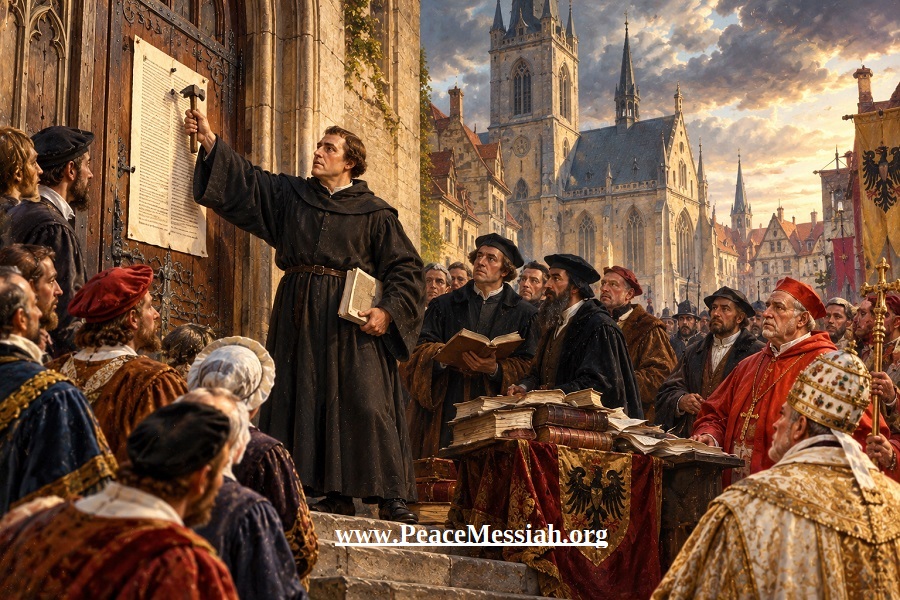
Martin Luther started the Protestant Reformation in 1517
This Letter to the Church in Sardis
prophesied the Reformation Period of Christianity (1517 – 1730s AD),
when Martin Luther launched the Protestant Reformation in 1517 by posting the 95
Theses on the door of All Saint’s Church in Wittenberg and emphasized on the
Salvation by Faith Alone. That was the wake up call for Christians who only paid
attention to deed and indulgence but forgot the essence of Christianity
- the salvation by faith.
"I
know your deeds; you have a reputation of being alive, but you are dead. Wake
up! Strengthen what remains and is about to die, for I have not found your deeds
complete in the sight of my God.” (Revelation 3:1-2)
6) The Letter to the Church in Philadelphia
The word “Philadelphia” means “brotherly
love”. In this letter, Christ indicates that He will open a door to the new
world that no one can shut, and that a new nation of God would be born, led by a
faithful leader like King David, characterized by “brotherly love” for all.
Christ also promises to keep this nation “from the hour of trial that is
going to come on the whole world to test the inhabitants of the earth."
(Revelation 3:10) Once victorious, the “New Jerusalem” will come down out of
heaven to this new world, and Christ will come with His “new name”
(Revelation 3:12).
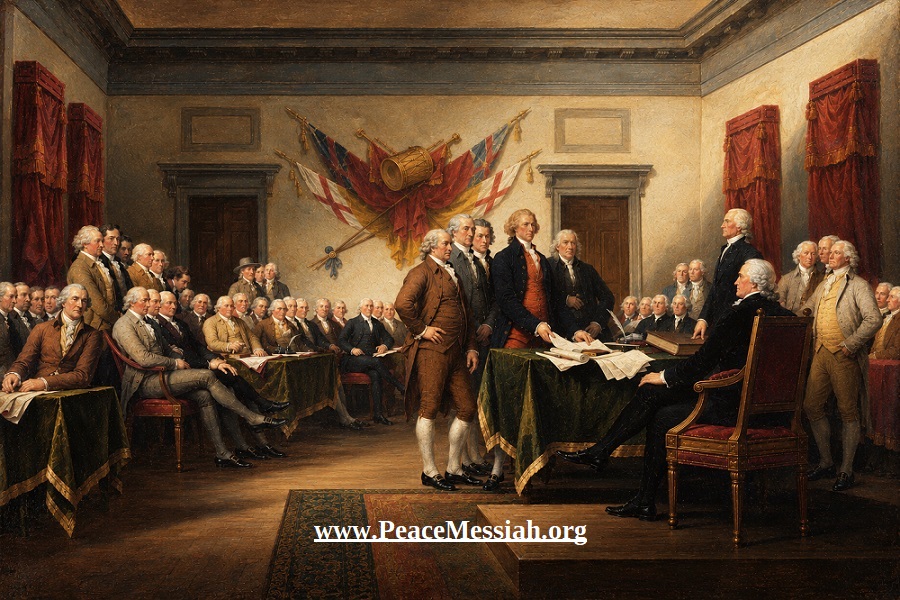
The Independence of the United States of America in 1776
This Letter to the Church in
Philadelphia prophesies the New World Period or Great Awakening Period of
Christianity (1730s – 1900 AD). It corresponds to the birth of the new
nation of God in the new world—the United States of America—led by a
faithful leader like King David, George Washington. The nation was born in
Philadelphia in 1776, following the Great Awakening that revived people’s
faith in the British American colonies during the 1730s–1750s. Christ also
kept His promise to protect the United States from the catastrophic destruction
of World Wars I and II, allowing it to emerge as a superpower after the wars. He
further prophesied that the “New Jerusalem” would come down from heaven to
this new nation of God rather than to the old Jerusalem in Israel, and that He
would have a “new name” at His Second Coming.
7) The Letter to the Church in Laodicea
The name “Laodicea” means “the
opinions and judgment of the people or of the laymen.” In this letter, Christ
rebukes those who pursue worldly wealth while losing their faith in God: “You
say, 'I am rich; I have acquired wealth and do not need a thing.' But you do not
realize that you are wretched, pitiful, poor, blind and naked.” (Revelation
3:17) This points to the rise of secularism as the mainstream voice in the
Christian world, with people increasingly pursuing secular desires. Christ then
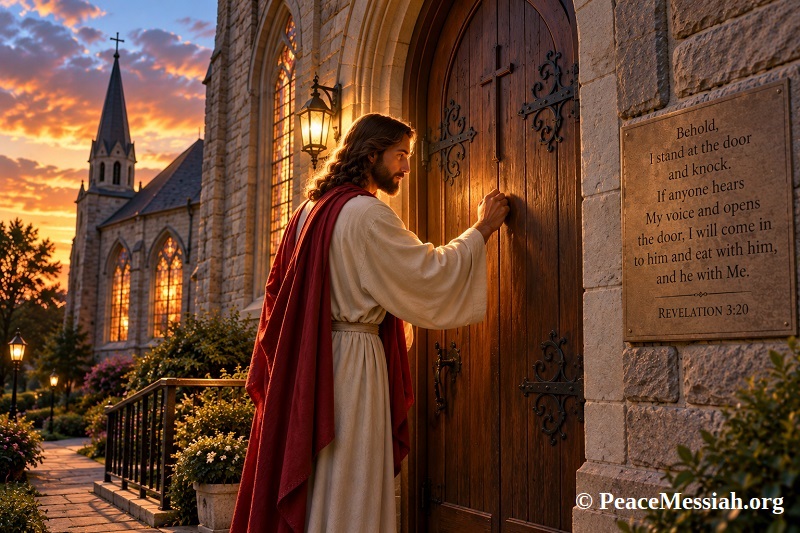
says, “Here I am! I stand at the door and knock.
If anyone hears my voice and opens the door, I will come in and eat with that
person, and they with me." (Revelation 3:20)
 |
 |
| “You
say, 'I am rich; I have acquired wealth and do not need a thing.' But you do not
realize that you are wretched, pitiful, poor, blind and naked.” (Revelation
3:17) |
“Here I am! I stand at the door and knock.
If anyone hears my voice and opens the door, I will come in and eat with that
person, and they with me." (Revelation 3:20) |
This Letter to the Church in Laodicea
prophesies the Apostate Period of Christianity (1900s – 2000 AD), when
people lost their faith in God after great technological achievements in the
material world and replaced the Word of God with layman’s opinions. However,
they are still "wretched, pitiful, poor, blind and naked” in the
eyes of Christ. Therefore, after humanity falls into this apostate stage of
history, Christ will come as a humble man, standing at the door and knocking. "Here I am! I stand at the door and knock.
If anyone hears my voice and opens the door, I will come in and eat with that
person, and they with me"
(Revelation 3:20). To
anyone who hears His voice and opens the door, He will come in and dine with
them, bringing them the Eternal Gospel with the great blessing of God.
These are the summaries of the prophetic
meaning of the seven letters to the seven churches. A more detailed analysis is
available in my book, Revelation Fulfilled, Unveiling the Mystery of the Book
of Revelation, on my website: www.PeaceMessiah.org.
3. The Visions on the Scroll in the Book
of Revelation
Many people have been taught that the
visions on the scroll in the Book of Revelation are about the disasters at the
“End Time” or the Apocalypse at the “End of the World”. However, they
missed the key characteristics of God’s prophecies in the Book of Daniel.
In the Book of Daniel, God used three
sets of dream and visions to prophesy the same sequence of historical events:
the rise of four kingdoms — Babylon, Medo-Persia, Macedon-Greece, and the
Roman Empire — which expanded over more than a thousand years from the 600s BC
to the 400s AD. How could all these visions in the Book of Revelation, which are
far more numerous and complex than those in the Book of Daniel, possibly be
fulfilled in such a short period of the “Seven-year Tribulation” during the
“End Time”?
Ever since the New Millennium began in
year 2000, many faithful people of God have recognized the signs of the “Second
Coming” all over the world. They just wondered when the “Four Horsemen of
Apocalypse” would appear to begin the visions of Apocalypse at the “End Time”
before the “Second Coming”.
However, they have all misunderstood the
visions of the “Four Riders on Four Colored Horses” at the beginning of the
visions on the scroll in Chapter 6 of the Book of Revelation. These “Four
Riders on Four Colored Horses” are not the “Four Horsemen of Apocalypse”,
who would bring disasters to the world at the “End Time”, as most people
have been taught for the past two thousand years. Instead, they actually
prophesied the four major historical events and periods in early Christian
history, just as the four beasts in the Book of Daniel prophesied the rise of
the four ancient kingdoms.
Now, for the first time in history, the
“Second Child” prophesied in the Bible (Revelation 12:5) reveals the true
meaning of these “Four Riders on Four Colored Horses” in Chapter 6 of the
Book of Revelation.
1) The
Prophetic Meaning of the Four Riders on Four Colored Horses
i) The First Seal Opened: A Rider on a
White Horse
After the Lamb opened the first of the
seven seals, “there was a white horse. Its rider held a bow, and he was
given a crown, and he rode out as a conqueror bent on conquest.”
(Revelation 6:2)
The Historical Fulfillment:
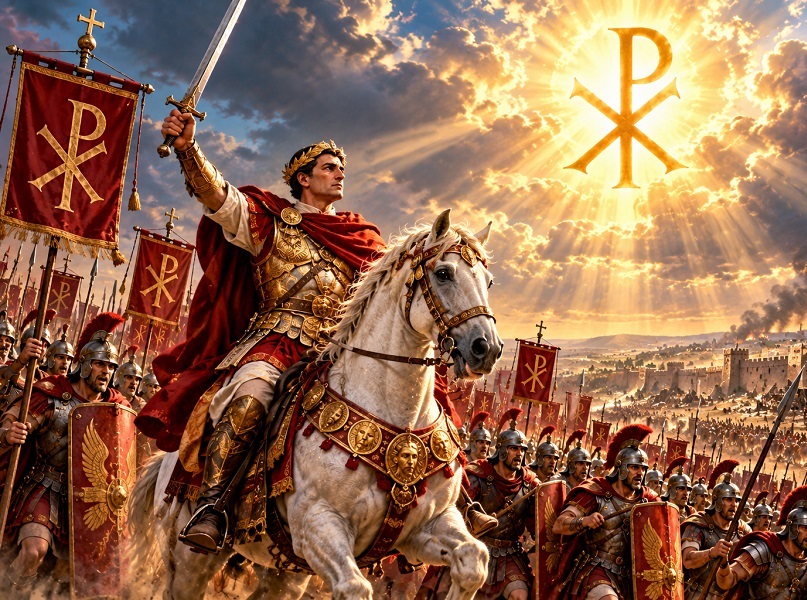 |
The Roman Emperor Constantine the Great liberated
Christians from persecution in 313 AD and established the first Christian
Kingdom on earth by converting the Roman Empire to Christianity. Ever since
then, the Christian kingdom has expanded across the world “as a
conqueror bent on conquest.”
Constantine the Great was chosen by
Christ as the liberator of Christians in the Roman Empire, just as the Persian
King Cyrus the Great was chosen by God as the “anointed” liberator of the
Jews who had been taken captive by the Babylonians (Isaiah 44:28, 45:1, 13).
Because of his significant contributions to the establishment of the first
Christian kingdom on earth and his pivotal role in liberating Christians from
persecution, God granted Constantine the Great the honor of appearing as a “Rider
on a White Horse”, in the same way the Messiah of the “Second Coming”
appears in the Book of Revelation 19:11.
|
ii) The Second Seal Opened: A Rider on a
Red Horse
After the Lamb opened the second seal,
“Then another horse came out, a fiery red one. Its rider was
given power to take peace from the earth and to make people kill each other. To
him was given a large sword.” (Revelation 6:4)
Historical Fulfillment:
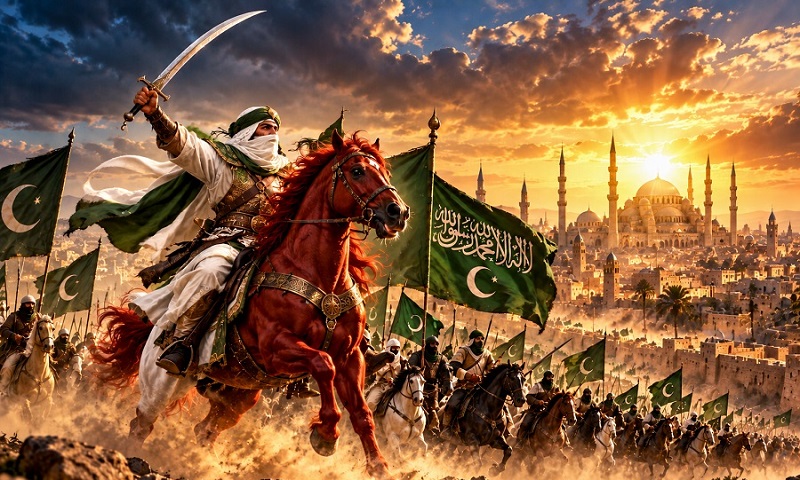 |
The Rise of Islam founded by the Islamic Prophet Muhammad in the Middle East in 610 AD. Over the next
century, Muslim armies expanded across the Arabian Peninsula and beyond, largely
through military conquest-“preaching the faith by the sword.”
This early emphasis on military conquest
and fighting also influenced the succession of power within the Muslim
community. Following Muhammad’s death, all four of his immediate successors
(the Rashidun Caliphs) were assassinated amid power struggles, rebellions, and
factional disputes. That's why, in this vision, the rider on a fiery red horse
was given a large sword to “take peace from the earth and to make people
kill each other.” (Revelation 6:4)
|
iii) The Third Seal Opened: A Rider on a
Black Horse
After the Lamb opened the third seal,
there was “a black horse! Its rider was holding a pair of
scales in his hand. Then I heard what sounded like a voice among the four
living creatures, saying, ‘Two pounds of wheat for a day’s wages, and six
pounds of barley for a day’s wages, and do not damage the oil and the wine!’”
(Revelation 6:5-6)
Historical Fulfillment:
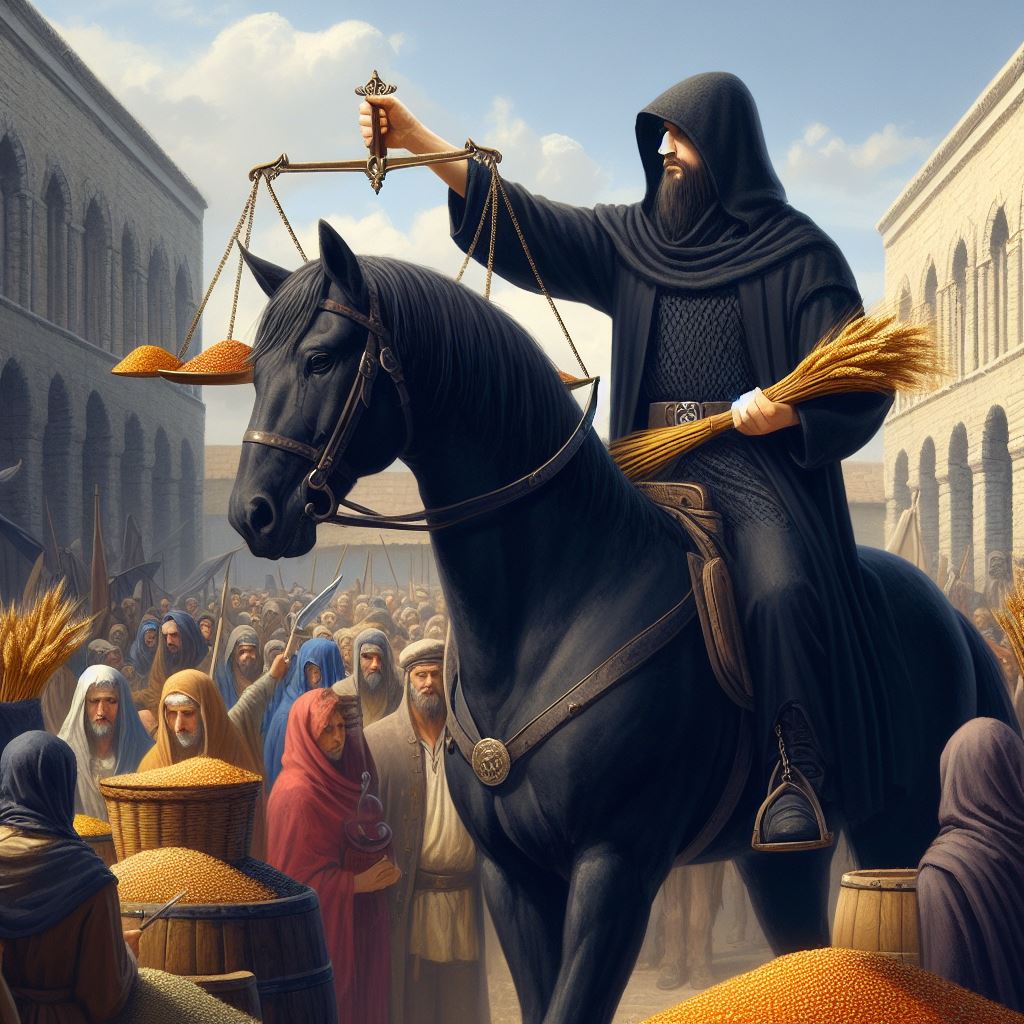 |
The Islamic Empire expanded through a
vast trading network during the Abbasid Dynasty
— known as the “Black Rider Dynasty.” The voice announcing the
prices of wheat and barley while cautioning against damage to oil and wine
symbolizes marketplace trading activities. This prophesied the vibrant
commercial prosperity of the Islamic world, enabled by extensive trade networks
spanning Asia, Europe, and Africa.
This era is known as the Islamic Golden
Age, a period of remarkable economic, scientific, and cultural achievements in
Islamic history. However, the expansion of the Islamic Empire eventually led to
conflicts with Christian nations in the Middle East and Asia Minor.
|
iv) The Fourth Seal Opened: A Rider on a
Pale Horse
After the Lamb opened the fourth seal,
there was “a pale horse! Its rider was named Death, and Hades was
following close behind him. They were given power over a fourth of
the earth to kill by sword, famine and plague, and by the wild beasts of the
earth.” (Revelation 6:8)
Historical Fulfillment:
The Dark Age from the 1100s to the 1400s
AD that filled with disasters—wars, famine,
plague, and barbaric Mongol invasion and destruction—which killed “a
fourth of the population on earth.”
This was the Dark Age for both the
Christian world in Europe and the Islamic world in the Middle East. It was
marked by major disasters—wars, famines, plagues, and barbaric invasions that
destroyed civilizations.
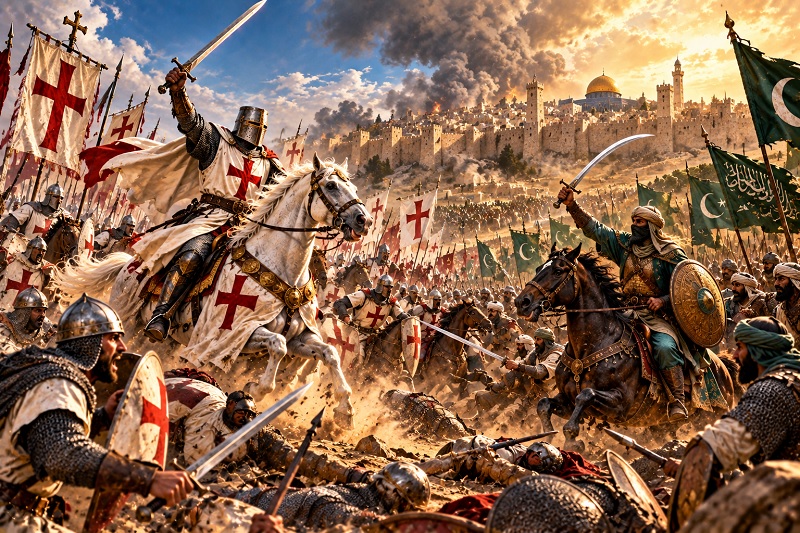 |
The Major Wars in the Dark Age
- The Wars of Crusades, (1096–1291 AD)
- The Hundred Years’ War (1336–1453 AD)
- The Fall of Byzantine/Constantinople (1453 AD)
The Big Famine (1315–1317 AD)
The Plague of Black Death (1346–1351 AD)
The Wild Beast – The Barbaric Invasion of
Mongols (1223–1242 AD)
|
The visions of the “Four Riders on
Four Colored Horses” prophesied the four historical periods and events
spanning roughly a thousand years from 313 AD to the 1400s AD. This is the same
way the visions of the four beasts in the Book of Daniel were fulfilled. It
confirms that God is consistent in His method of prophecy and fulfillment
through historical events in the history of Israel, Christianity, and Islam.
2) The Major
Historical Events Prophesied in the Rest of the Book of Revelation
In the rest of Chapter 6 of the Book of
Revelation, after the fifth seal was opened, there were slain souls under the
altar crying out to God for justice (Revelation 6:9-11). This prophesied the
religious persecution within the church, especially the Inquisition of the
15th-16th century.
After the sixth seal was opened, signs
of God’s judgment appeared as the sun turned black, the moon turned red, the
stars fell from the sky, and people on the earth were terrified (Revelation
6:12-17). However, God had mercy on the people of the earth and called off the
judgment just before it was about to be carried out by the four angels at the
beginning of Chapter 7 of the Book of Revelation. This led to the Protestant
Reformation prophesied in Chapter 7 of the Book of Revelation.
In the following chapters of the Book of
Revelation, the visions on the scroll prophesy major historical events in the
next five hundred years:
- The Religious Wars between Protestants and Catholics
in Europe (16th to early 18th century)
- The New Exodus to the New World — the birth of the
United States of America (17th-18th century)
- The French Revolution and the Napoleonic Wars (1789
– 1815)
- The Second Great Awakening and the rise of Mormonism
in the United States (19th century)
- The American Civil War (1861-1865) and World Wars I
& II in the early 20th century
- The Communist Revolution in the 20th century, the
birth of the “Second Child” in the Bible, and the end of the “Cold War”
in the 1990s
- The Spiritual Awakening of the Messiah of the “Second
Coming” at the beginning of the New Millennium in year 2000
- The New Revelation of the “Eternal Gospel” for
“every nation, tribe, language and people,” and the “September 11”
terrorist attacks as the warning of the “Fall of Babylon”
- The plague of AIDS, water pollution, the war in Iraq,
and the potential “Armageddon” in the Middle East
- The “Fall of Babylon”
- The Grand Finale of the “Second Coming” for the
New Millennium of Peace & Wisdom
All these major historical events in the
past seventeen hundred years were prophesied by the visions on the scroll in the
Book of Revelation. Since the Book of Revelation contains far more visions than
the Book of Daniel, it is entirely reasonable that the visions in the Book of
Revelation cover a much longer period of time than the thousand-year period
covered by the visions and dream in the Book of Daniel.
Therefore, all the past speculations
that interpret the visions in the Book of Revelation as the Apocalypse or
catastrophes at the “End Time” are incorrect. For more detailed information
about the prophecies in the Book of Revelation, please follow the “Second
Child” in the Bible at www.PeaceMessiah.org.
I. How to Distinguish the True Messiah of the “Second Coming” from
False Messiahs
II. Unveiling the 2,000-year Mystery of the
Visions in the Book of Revelation
III. The Spiritual
Rapture and the Divine Revelation in the Book of Revelation
IV.
The Divine Revelation and Judgment on the Current Affairs in the World
<< Home | I
| II | III | IV
>>